



Balentic’s Private Markets 2026 Outlook
When Liquidity And Distributions Get Real

Another year draws to a close, and private markets end 2025 with a sense of uneasy momentum. Activity is picking up, fundraising windows are reopening and credit markets are more functional than they were eighteen months ago. Yet beneath the surface, the industry is shifting in ways that will define the next decade far more than any single quarter ever could.
As we look ahead to 2026, one theme runs through every GP meeting, LP call and off-the-record conversation across our platform: private markets are entering a period of structural, not cyclical, change.
Liquidity expectations, distribution models, sector priorities and the very architecture of LP portfolios are all being rewired at the same time.
Based on our conversations with LPs and GPs – and the signals we see across our platform interactions – this Outlook is our attempt to cut through the noise. It is not necessarily comfortable reading, but it reflects the unsaid truths that both LPs and GPs will need to confront in the year ahead.
Before diving in, and for those racing to clear their desks before year-end, here is a quick TL;DR and Balentic’s Four 2026 Calls.
“The difficulty lies not so much in developing new ideas as in escaping from old ones.”
John Maynard Keynes
See How Orca Matches GPs & LPs
Capital raising and allocation is being digitised – Orca is transforming how LPs and GPs connect in private markets through a curated, data-driven platform – built for real capital decisions, not pitch decks.
Key takeaways
- Private markets enter 2026 with improving activity but also deep structural shifts in liquidity expectations, distribution models and sector priorities
- LPs are poised to rebalance portfolios: more infra and private debt, selective buyout exposure, and sharper scrutiny of defence and venture
- Fundraising pressure intensifies as four dollars chase every LP dollar available, making distribution talent scarcer and more valuable than deal talent
- Liquidity becomes the defining theme of 2026, from creative solutions (NAV, secondaries) to the real risk of semi‑liquid structures being tested in stress
- GPs face a strategic crossroads: evolve into true platforms with permanent capital and modern distribution – or remain legacy partnerships vulnerable to consolidation
Balentic's four 2026 calls you won't hear on stage
1. A major LP publicly cuts back on buyout and venture
For some time institutional LPs have quietly admitted that their private equity and venture books are too large for a higher-rate, slower-exit world and allocations are quietly being adjusted down.
In 2026, one household-name sovereign fund, pension or endowment finally says it in public: not a “pacing tweak”, but a structural cut to buyout and VC, perhaps twenty to forty percent below peak allocations.
Once a respected first mover goes on record, others will have political cover to follow. Fund sizes at all but the most compelling franchises shrink, marginal GPs lose whole pockets of their LP base, and LP rosters compress from long lists of “relationships” to a tighter core of truly trusted GPs.
It will look sudden, but it has been brewing for years.
2. A top-20 GP buys distribution or merges with a credit powerhouse
The real bottleneck for GPs is no longer deal flow – it is access to permanent, scalable capital in a world where roughly four dollars of GP demand now chase every institutional LP dollar available.
Fundraising pressure has become structural, not cyclical. Investment teams can be expanded with AI and junior talent is a dime a dollar, but the people who can reliably unlock ten- and hundred-million-dollar tickets from sophisticated LPs remain extraordinarily scarce.
In 2026, at least one top-20 global firm is likely to acknowledge this tension publicly by making a decisive move: acquiring a significant wealth-distribution platform or combining with a major private-credit manager to secure both durable fee income and an industrial-strength distribution engine.
When that happens, the industry will split more sharply between true asset-management platforms built around permanent capital and modern distribution – and legacy private-equity partnerships still running a relationship-driven playbook – and conversion rates of 1%.
3. A major GP gates withdrawals on a semi-liquid evergreen fund
Semi-liquid evergreen funds have been sold as the perfect compromise: private markets returns in a friendly, periodic-liquidity wrapper. They have not yet been tested in a world where public markets fall sharply, rates stay high, geopolitics worsens and LPs suddenly need cash.
In 2026, one globally recognised manager that has leaned hard into wealth channels and ‘democratization’ is likely to hit that wall. Redemptions spike just as secondary-market liquidity dries up. The manager hits its outflow limits and gates withdrawals on a flagship evergreen fund. It is not fraud or mismanagement, simply the mechanics of illiquid assets meeting optimistic liquidity promises.
The industry survives, but the illusion is gone. Regulators ask tougher questions about liquidity matching and suitability. Wealth platforms pause, terms tighten, notice periods lengthen, consultants revise their models, and private individuals go risk off – the end of the ‘democratization’ experiment.
LPs relearn the basic rule: in private markets, liquidity is not a free feature – it is a conditional promise that can be switched off.
4. Defence tech becomes its own allocation line – and Europe has to choose
Defence and defence-adjacent tech are moving from awkward topic to explicit allocation line.
In 2026, many LPs will stop hiding these exposures inside generalist mandates and start labelling them as a distinct sleeve with specialist managers, policy-linked vehicles and clear reporting.
What we hear on Balentic’s platform is that European managers face a harsher test than their marketing suggests. LPs doubt that a handful of dual-use holdings really constitutes a defence track record, worry about exits that depend on United States buyers, and question the need for so many early-stage European defence start-ups.
The likely outcome is a bar-bell: conviction capital into a few Anglo-American specialists, plus smaller “political” tickets to local GPs to satisfy domestic stakeholders.
What will move private markets in 2026?
Macro, credit and distributions
The macro backdrop into 2026 is likely to remain uncomfortable rather than catastrophic. Rates are higher than the previous decade’s average, even if peak tightening is behind us. Growth is patchy. Politics are noisy.
For private markets, the combination of slightly easier credit and pent-up exit pressure is what matters most. After several lean years, LPs are pushing more firmly for distributions. GPs are more willing to transact, aided by deeper private credit markets and more creative capital solutions such as NAV facilities and structured secondaries.
That does not guarantee a broad-based boom. It does mean that high-quality assets with clear earnings resilience, pricing power and credible exit routes should find both buyers and lenders. Weaker stories will struggle, regardless of sector labels.
Liquidity, secondaries and creative capital solutions
Liquidity will be the operational theme of 2026. Secondaries, GP-led continuation funds, strip sales and structured liquidity solutions have already moved from exotic tools to mainstream options on both the GP and LP side.
NAV loans and other fund-level facilities are increasingly common, both to manage capital calls and to meet distribution expectations without selling crown-jewel assets at unattractive prices.
From Balentic’s vantage point, the question is no longer whether a manager uses these tools but how they use them and how they explain them.
LPs who understand the mechanics and the trade-offs can make informed decisions about alignment and risk and move at the required speed. LPs who do not risk being surprised when liquidity comes with unexpected conditions and potentially missing out.
The semi-liquid evergreen story sits inside this broader liquidity theme. It is the most retail-facing manifestation of a much deeper industry tension between the desire for flexible capital and the reality of owning illiquid assets.
Flow shifts: infra, private debt and the shrinking dominance of buyout
Across our platform, infra and private debt are consistently the two strategies that LPs mention when talking about incremental allocations. Infrastructure offers long-duration, often inflation-linked cashflows. Private credit offers yield and perceived downside protection, particularly where sponsors can provide covenant control and collateral.
Traditional buyout remains important, but its dominance is fading. Many LPs aim to hold buyout exposure roughly flat in nominal terms while growing allocations elsewhere. Generalist venture faces the toughest questions, especially in Europe, where LPs worry about exit pathways and the sustainability of government-supported ecosystems.
What we are hearing from GPs: fundraising, distribution and visibility
Behind the conference panels about “green shoots”, the conversations with GPs are candid. Fundraising is hard. In many cases it is getting harder. A handful of stand-out brands and strategies can still raise quickly. The rest live in a world of prolonged closes, multiple interim targets, heavier reliance on a small number of cornerstone LPs, and the hard work of picking up smaller and smaller checks.
Liquidity, despite a visible pick-up in deal announcements, still feels tight. LPs in many markets are using new commitments to backfill distributions and secondary sales rather than to expand total exposure. That creates a zero-sum dynamic for many GPs, where one firm’s new capital is effectively funded by redemptions elsewhere in the alternatives portfolio.
This is where the scarcity of fundraising talent becomes acute. Deal staff are plentiful and increasingly leveraged by AI tools. Rainmakers who can consistently deliver large, high-quality commitments are not. They are the internal bottleneck to growth.
The other theme we hear repeatedly is visibility.
Quarterly emails and an annual general meeting are no longer enough to stay front and centre with LPs who are bombarded with information. GPs are realising that they need a proper sales and distribution function, not just a small investor relations team.
They need thoughtful content, a coherent digital presence and a consistent narrative that speaks directly to LP priorities. Some firms have a decade’s head start on this. Many are only now starting to build.
In practical terms, this is becoming a competitive advantage. GPs who show up in LP inboxes, feeds and internal discussions with useful insights and clear reporting are more likely to survive the coming consolidation of relationships.
Those who rely solely on track record and sporadic contact risk slipping down the internal ranking when LPs decide who to keep.
What we are hearing from LPs: infra, private debt and uncomfortable defence
On the LP side, three patterns stand out in our dialogues.
First, there is a strong bias towards infra and private debt. These are seen as the building blocks of resilient private markets portfolios: they provide income, some inflation protection and exposure to real-world assets that matter to societies and economies. LPs talk about using them to balance out the more volatile parts of their alternatives book.
Second, defence and defence-adjacent strategies are very much in focus, but the tone is sceptical, especially in Europe. LPs tell us that many GPs now claim to have been investing in defence for a decade or more, often on the basis of a few dual-use holdings.
LPs rightly question whether this really amounts to an edge in procurement, regulation or technology. They ask bluntly who the buyers will be and how comfortable they are with relying on United States acquirers.
Third, European defence-tech venture is viewed with caution. LPs are asking whether there is genuine industrial depth to support large numbers of start-ups, what the path to consolidation looks like and how funding gaps between early grants and late-stage private capital will be bridged.
Several openly describe their likely approach as a bar-bell: conviction allocations to one or two specialist Anglo-American managers, combined with small, politically sensitive tickets to local funds.
Why this matters to both GPs and LPs
For GPs, 2026 is a year in which distribution and liquidity discipline become strategic, not tactical, issues.
Those who invest early in serious sales functions, thoughtful communication and clear liquidity frameworks will be better placed when LPs rationalise relationships and regulators tighten expectations.
GPs that rely on legacy goodwill, minimal investor communication and aggressive liquidity promises in evergreen products risk being caught out.
For LPs, the next year offers a rare opportunity to reset private markets portfolios in line with stated beliefs about risk, liquidity and long-term themes. They can decide whether to be early movers in resizing buyout and venture, or to wait until others move first. They can calibrate how much weight to give to defence, climate and AI-adjacent strategies without being swept up in narratives.
Most importantly, LPs can decide what kind of liquidity they really want from private markets and what trade-offs they are willing to accept in terms of governance, complexity and return potential.
Risks and opportunities from the LP perspective
The opportunity for LPs lies in differentiation. In a world where not every GP will raise its next fund on the same terms, LPs can channel capital towards managers who combine real sector expertise, operational depth and honest communication.
They can build portfolios that are balanced across buyout, credit, infra, and selective growth themes, rather than over-concentrated in a handful of crowded strategies.
The risk lies in complacency. Accepting evergreen liquidity promises without fully understanding the mechanics. Allowing political or public-relations pressure to dictate defence allocations rather than a clear investment thesis. Continuing to back managers whose main response to the new environment is to rename existing strategies and add buzzwords.
From a governance and legal perspective, LPs need to ensure that their own documentation, risk frameworks and board narratives keep pace with what they are actually doing in private markets. That is particularly important in areas such as semi-liquid products, NAV financing, GP-led secondaries and defence-related investments.
Practical recommendations for LPs
Doing this necessitates substantial resources from LPs, particularly in terms of thoroughly screening a larger portion of the investment landscape to identify and eliminate underperforming managers, while also aiming to select managers with the potential to outperform in the coming decade.
Balentic is here to help
Interrogate liquidity rather than assuming it
Ask managers to explain, in concrete terms, how semi-liquid and evergreen structures would behave in a genuine stress scenario. Request examples of how they have handled past redemption spikes or market disruptions.
Re-map your strategy mix
Build a clear picture of your current and projected allocation across buyout, credit, infra, growth, venture, secondaries and evergreen solutions. Decide explicitly which areas you want to grow, hold flat or shrink. Document the rationale so that it is defensible to boards and stakeholders.
Evaluate fundraising and distribution capacity as a core part of manager selection
In DD, spend real time with the people responsible for capital raising and client service, not just the investment committee. Look for evidence of a thought-through distribution strategy, coherent content, and a healthy balance of institutional and wealth channels.
Demand evidence, not slogans, in defence and other sensitive themes
For defence and defence-adjacent strategies, seek concrete case studies, procurement relationships and exit histories. For climate, AI and healthcare themes, look for industrial partners, regulatory understanding and proof of value creation. Avoid managers whose pitch rests primarily on re-labelling existing holdings.
Clarify your own red lines and political constraints
Be explicit about what you can and cannot do in defence, dual-use and security-sensitive sectors. This avoids ad-hoc compromises later and makes it easier to distinguish between conviction allocations and political allocations.
In case you missed it - the best of Balentic in 2025
2025 was a year where private markets were forced to confront reality – liquidity constraints, geopolitical shocks, and a shifting LP agenda.
Throughout the year, Balentic Insights and the Balentic Edge podcast became a barometer for what LPs and GPs were really thinking about.
The pieces that resonated most weren’t necessarily the most technical – they were the ones that captured a moment, challenged assumptions, or provided clarity when the industry narrative felt particularly noisy.
Below is a short tour through the articles, episodes and research that defined Balentic’s year, and offered early signals of many of the themes shaping this 2026 Outlook.
Most read on Balentic Insights



The 12-Trillion Dollar Question
A clear explanation of the private-markets funding gap and why global allocators are reorganising their portfolios around long-duration, real-asset and solutions-oriented capital
Target Locked: The Rising Case for Defence in Private Markets
Our three‑part deep dive into defence investing became essential reading during a year marked by geopolitical escalation and a renewed focus on industrial capacity. LPs told us it helped them separate hype from reality.
NAV Loans Unlocked: Navigating Risk and Opportunity
A practical guide to what NAV financing really is, why it exploded in use during liquidity scarcity, and how LPs should underwrite risk, incentives and alignment. A must-read for investment committees.
Most listened to on Balentic Edge
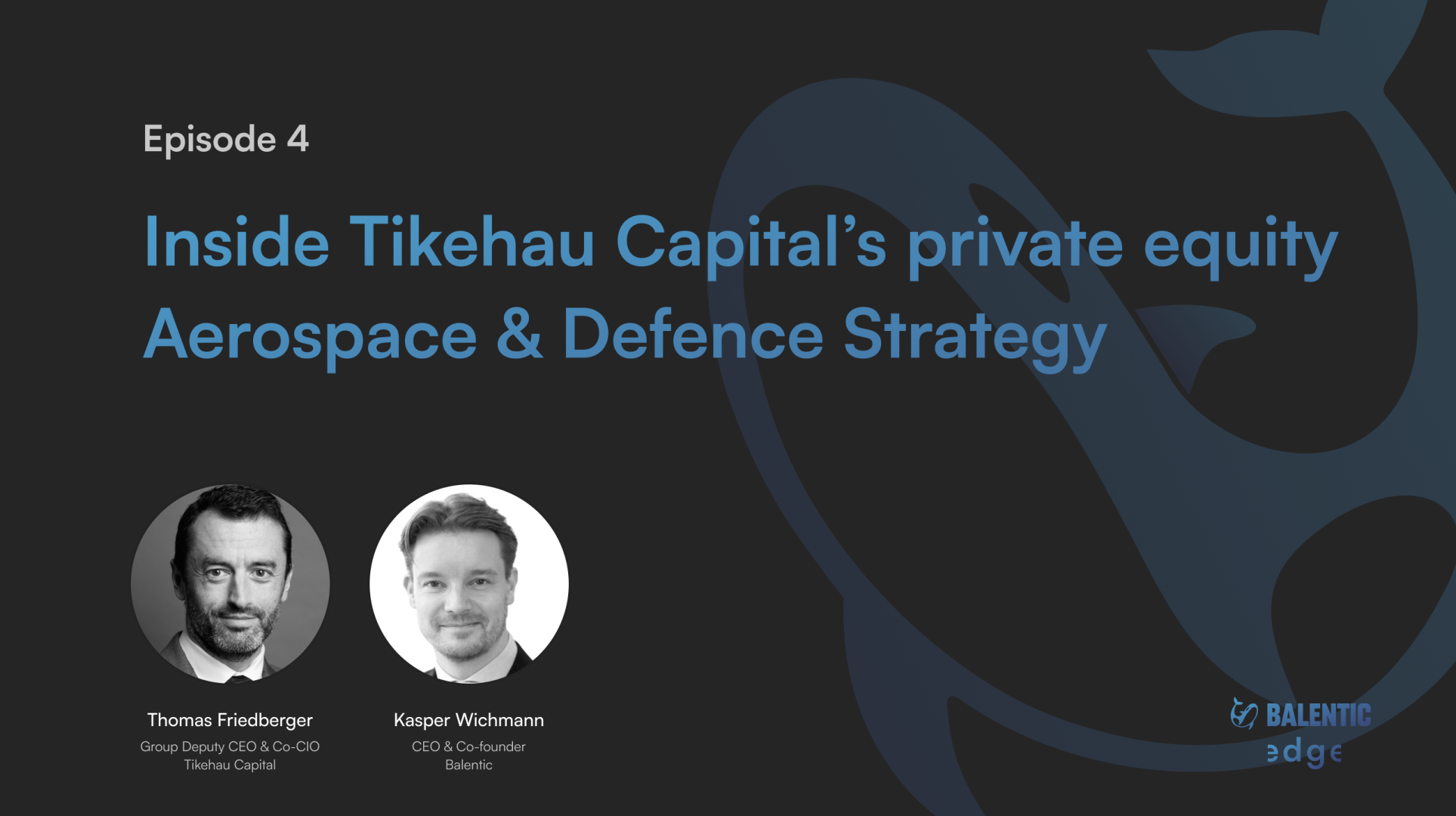


Inside Tikehau Capital’s Private Equity Aerospace & Defence Strategy
A rare, inside‑the‑room conversation about how a major European platform builds and executes a defence‑focused private equity strategy.
Beyond Top Quartile: Rethinking LP Strategy in Private Markets
A candid discussion on why traditional LP playbooks are breaking down and what a more resilient, next‑decade allocation model looks like.
Buyout Discipline in VC: Morphosis’ Playbook for Repeatable Wins
A deep dive into how a venture firm applies buyout‑style discipline to sourcing, underwriting and portfolio construction.
What LPs told us in 2025: Key findings from our annual survey
Have a great election day.
Our yearly LP survey, one of our most downloaded pieces, captured several important undercurrents:
- LPs are tilting decisively toward infrastructure and private debt
- Traditional buyout exposure is being held flat or trimmed
- Defence is on more IC agendas, but conviction varies sharply by region
- Liquidity management is now a top‑three priority across most institutions
- Relationship consolidation is accelerating, with LPs rewarding transparency and operational depth
Get your copy of the full survey here.
A note of thanks
Thank you to all our customers, partners, readers, and listeners for your support, insights and engagement throughout 2025. Every conversation, email, download and comment has helped Balentic shape our thinking and the work we do.
We wish you and your families a very Merry Christmas, a restful holiday break and a healthy, successful and fulfilling 2026.
Stay Illiquid
Kasper
Sources
-
BlackRock: Private Markets Outlook (private credit, infrastructure and real assets context).
-
Goldman Sachs Asset Management: Private Markets and Alternatives Outlook.
-
Federated Hermes: Private Markets 2026 or similar outlook pieces on secondaries and GP-led deals.
-
Private Debt Investor / Infrastructure Investor: LP Perspectives survey reports (for infra and private debt allocation intentions).
-
S&P Global and other industry data providers: coverage of defence and aerospace deal volumes.
-
PitchBook and similar: reports on European defence tech and funding dynamics.
More Insights




Balentic Edge
Sign up to keep up to date with the latest news and updates.
© 2025 Balentic ApS. CVR: 44034255. All rights reserved.
Privacy Policy | Terms of Service
The Balentic website and Orca are, and are expected to continue to be, under development. Consequently, some of the features described in this Overview and/or on the website may not yet be available or may work differently. Some features may furthermore not be available to all users.